Turning Himalaya’s Waste Into Mountains of Value
Every year, thousands of people hike up the Himalayas, the highest mountains on earth - and they leave their trash behind. But, through a collaboration between Sagarmatha Next and Moware, Precious Plastic machines are being used to turn trash into handcrafted products. This raises awareness for plastic pollution while also offering a beautiful souvenir and generating income for local communities. With your support, Precious Plastic can scale their work so that more initiatives like these can tackle plastic waste around the world.
The High Himalayas, the “roof of the world,” might as well be on another planet: Twice as high as the Alps in Europe, trees don’t grow here, the rocks are carved into bizarre shapes, and temperatures drop below -30 degrees Celsius. And yet, people venture up the slopes in search for adventure, in an area that stretches across India, China, Bhutan, Pakistan, Afghanistan - and Nepal, where our story begins.
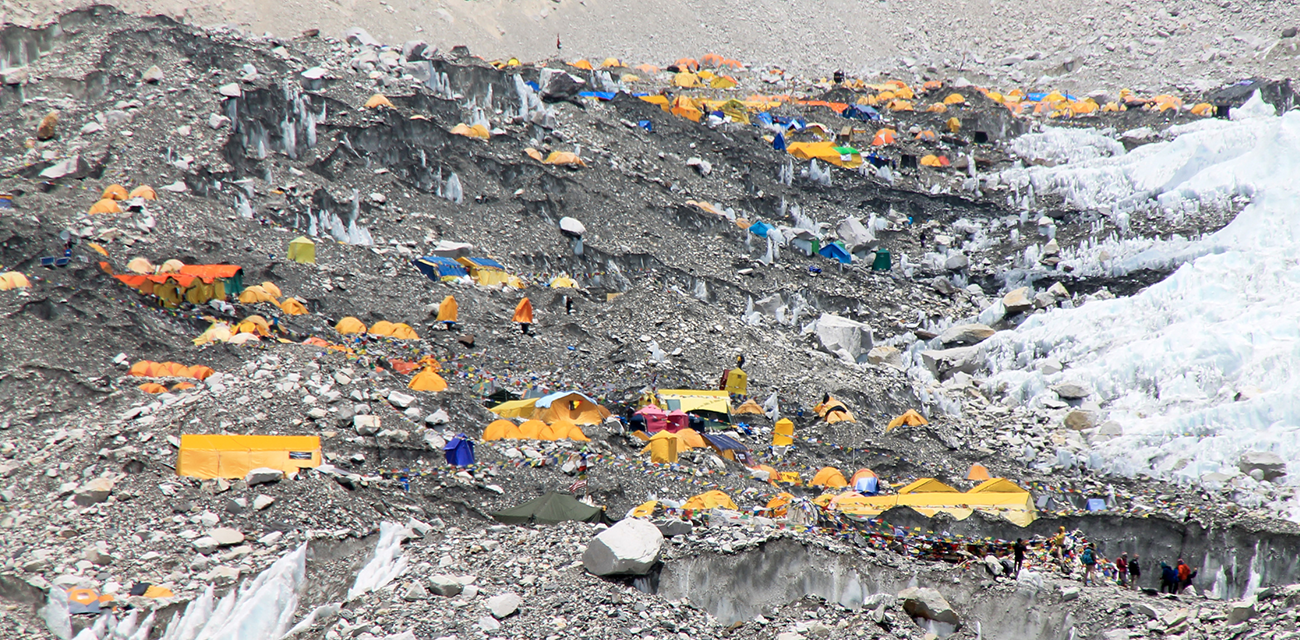
Tourists come here from all over the world to admire the natural wonder of Sagarmatha National Park and conquer its peaks. While the income they bring to the locals is welcomed, the trash they litter the mountains with, is not. In 2019 alone, around 80,000 visitors, porters, sherpas, and workers came through the Khumbu Valley, resulting in an estimated 790 kg of new waste per day during trekking seasons, which is up to 200 tons a year. According to the Himalayan Cleanup Report of 2024, 80% of the waste is made of single-use food and drink packaging: soup cups, plastic forks, water bottles, plastic bags… it’s not just an eye-sore in an otherwise majestic landscape, but also brings harm to the local ecosystem. As plastic breaks down, it turns into tiny particles that can leach chemicals into the water and soil - which is impacting the health of wild animals, livestock, and the local people. Studies show that these so-called micro- and nanoplastics have been confirmed in the region, even at the highest altitudes.
It’s in this context that “
” (a learning hub, gallery, and visitor’s center) and “Moware” (a women-led recycling workshop) have joined forces to turn trash into treasure: They realized that they could turn waste into a resource, if they could collect it and processed it right; quite literally transforming mountains of trash into mountains of value.3 Teams, 1 Goal: Less Plastic, More Value
Two years ago,
to see the process with our own eyes.The idea is simple: Collect waste, clean it, shred it, and melt it down in molds of thoughtfully designed souvenirs.
But the execution is tricky: There is no centralized garbage collection system in Nepal, and getting the waste from a remote mountain trail to a plastic recycling workshop is a serious challenge. The process has several moving parts, with different organizations each doing their part.
Step 1: Collect the Trash - “Carry-me-Back”-Program
Before anyone can make a work of art out of plastic, they first need the plastic all in one place. But how do you collect waste in a country without standardized garbage collection systems?
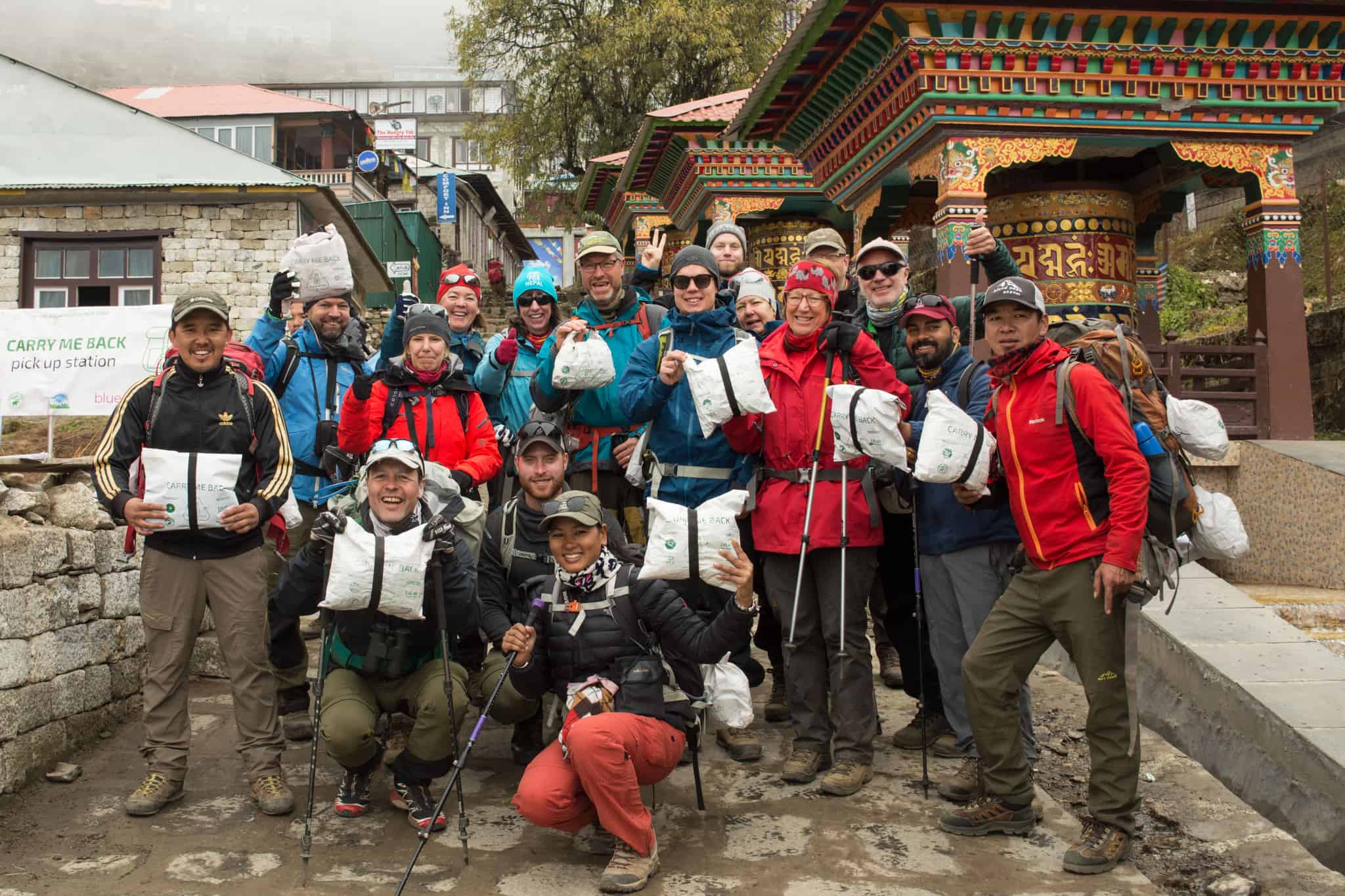
Sagarmatha Next came up with the “Carry-me-Back”-Program, a kind of informal mini-trash-collection system. Here’s how it works:
When visitors begin their trek back down from the mountain slopes, they are invited to pick up a bag that is filled with 1kg of plastic waste. This waste was packed by the Sagarmatha Pollution Control Committee, a local NGO in charge of collecting and managing the waste in the Khumbu region.
The visitors then carry those bags out of the national park and deliver them to drop-off locations.
Step 2: Process the Plastic
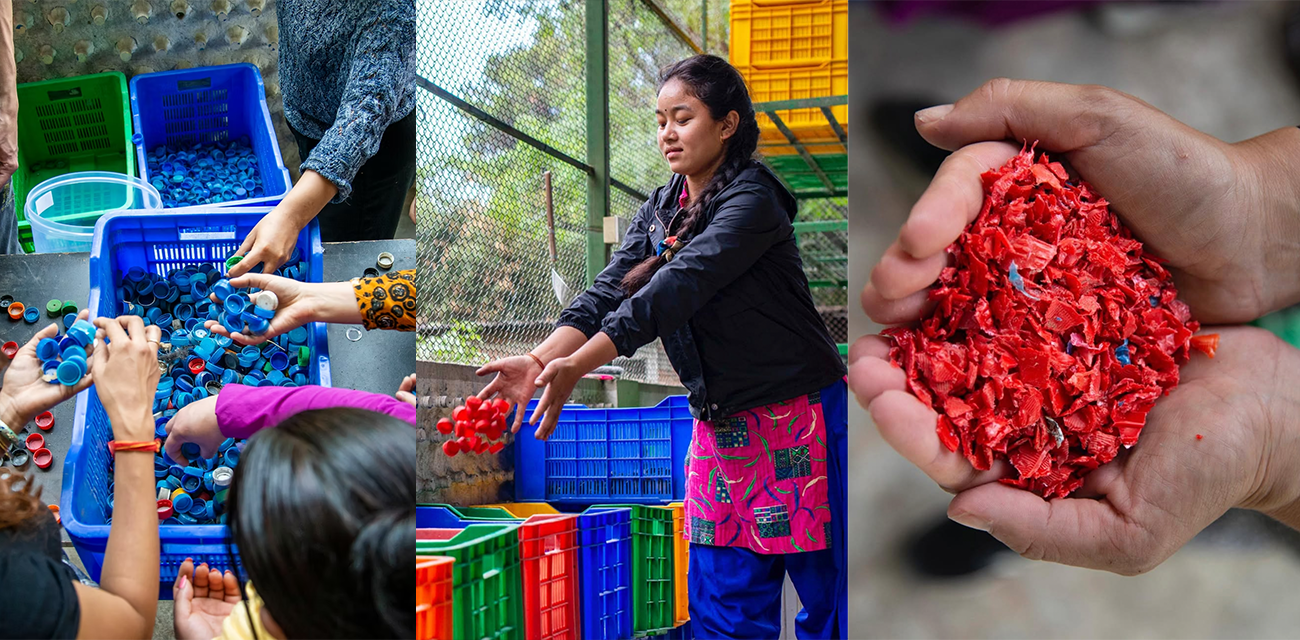
The collected waste bags are then distributed to different recycling companies, by a social enterprise called Blue Waste 2 Value, in Kathmandu.
Moware, a women-led plastic recycling workspace in Nepal who currently employs 12 women full-time, receives the plastic waste and does the work washing it by hand and shredding it.
Step 3: Make cool Products!
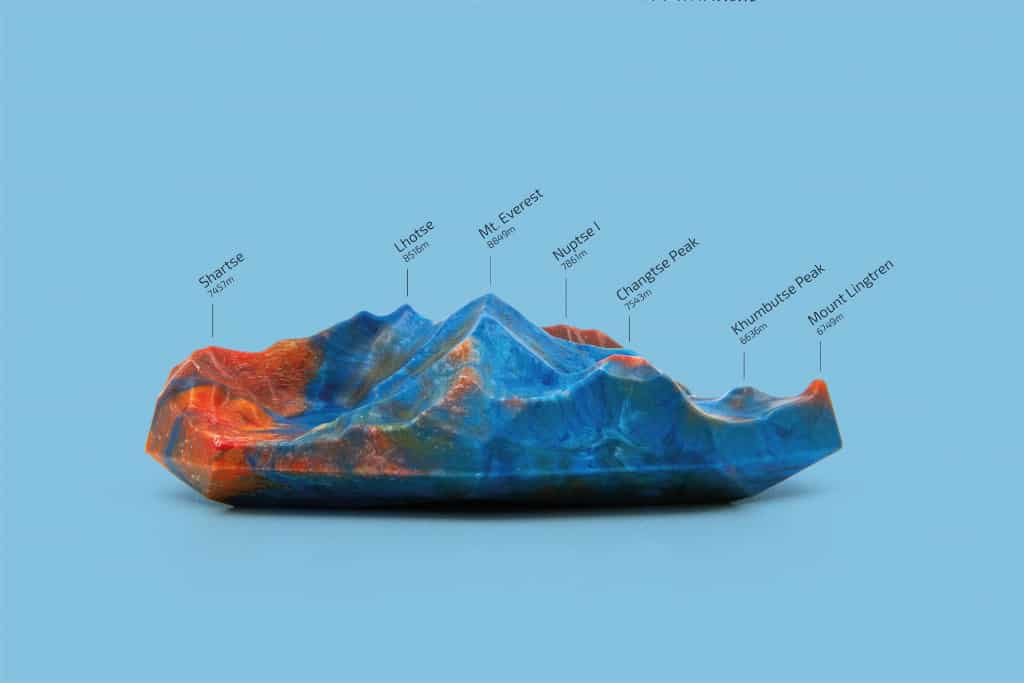
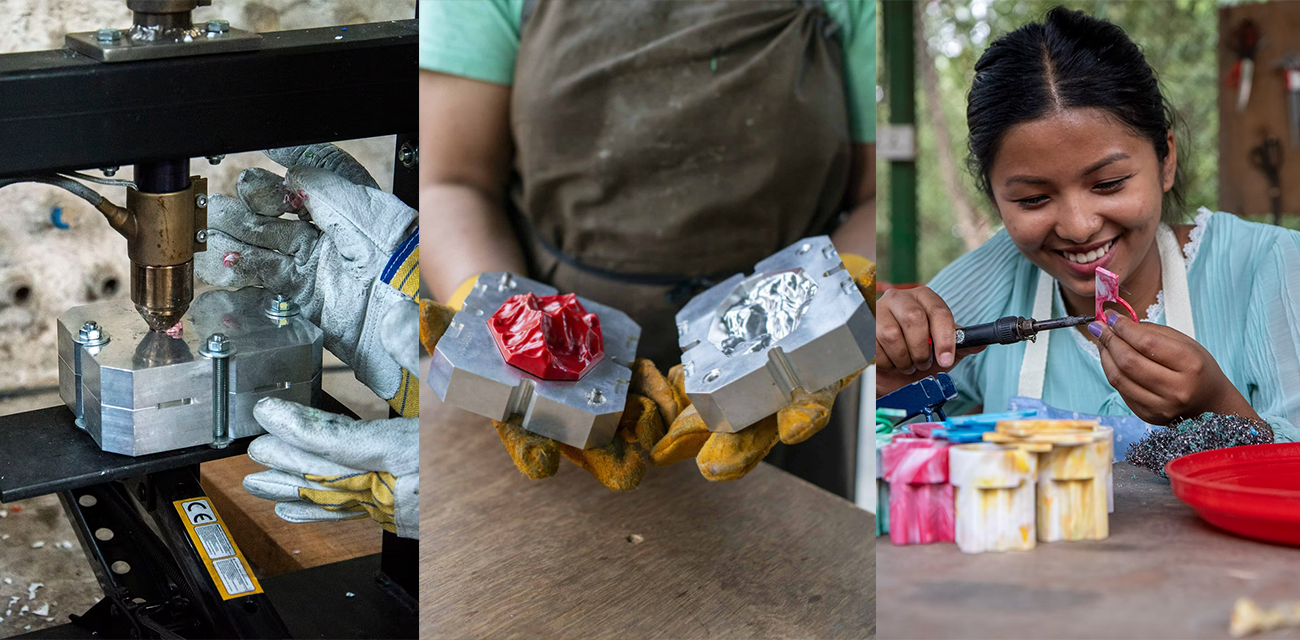
Then the fun begins for plastic workspaces, Moware uses Precious Plastic machines to turn the raw materials into various products - including one of their most popular items, a 3D-sculpture of the Himalayas, designed by Super Local studio. This sculpture is not only handmade art, it also carries a story within: It takes exactly 36 bottle caps to make one sculpture, which is the average amount of bottle caps a tourist leaves behind on their round-trip to Everest basecamp.
Moware’s injection mold machines were designed and manufactured by Super Local, who was able to access the active Precious Plastic community for support in their process. Additional machines have been purchased from Wedoo, another Precious Plastic. This is the kind of accessibility and knowledge sharing that Precious Plastic is designed to help with.
Step 4: Show the World!
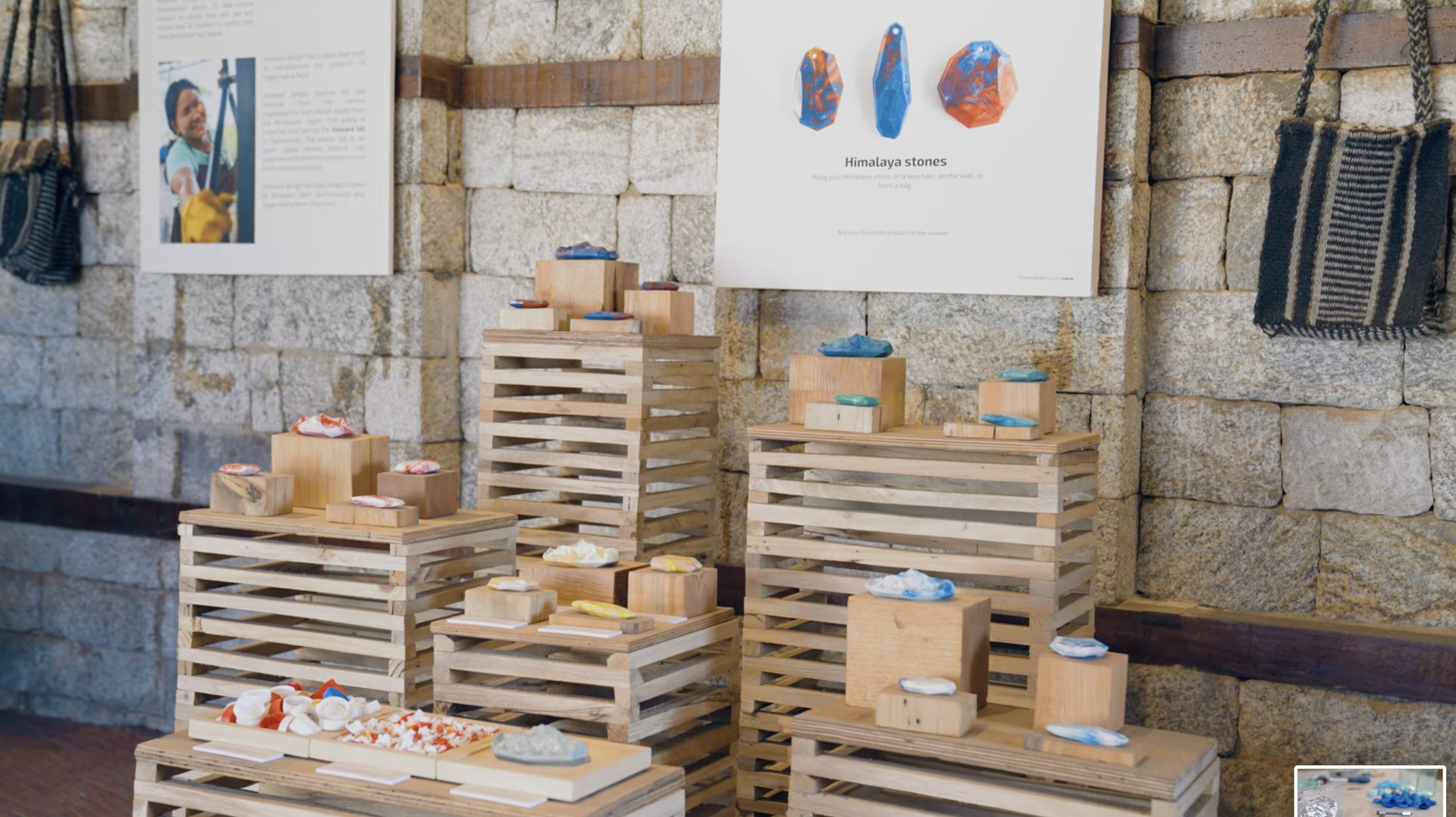
Finally, the finished products are sold in the Sagarmatha Next visitor’s center. Here, as many as 70,000 travelers and locals alike have learned all about the effects of plastic waste and how trash can be reused. Visitors can see art exhibits, attend workshops, or buy the fruits of better waste management, in the form of a cool souvenir to take home.
Real-World-Impact
The pilot project in 2019 saw roughly 2500 guides and trekkers participate, transporting a total of 4000 kg of waste to Kathmandu, or 1.6 kilos on average. With roughly 80,000 visitors coming through the region each year, a total of 80,000 kilos of waste could be recycled in this way.
Impact in numbers (2025):
1200+ pieces of recycled plastic souvenirs
1000 kilos and counting of plastic upcycled with Moware since 2022
33450+ kilos of waste transported
Support Precious Plastic, Support Himalayan Recycling
With the introduction of Precious Plastic technology, Moware is now growing plastic recycling as its main service, with furniture being next on the list for its product offering. Together with Sagarmatha Next, the aim is to introduce more pick-up stations to the Carry Me Back-scheme, and ensure that more of the plastic collected can be cleaned and reused in the production.
It is initiatives like these that Precious Plastic was made for: a community with small-scale plastic recycling machines and knowledge, so plastic can be made into valuable products anywhere in the world, and locals can make a living. Even in a remote location like the Himalayas.
But Precious Plastic can’t run without funds to pay for operational costs like a dedicated team to oversee the machine development, answer community questions, maintain the website… Precious Plastic has given away their knowledge to hundreds of workspaces all over the world in the last 10 years. More people can recycle their local waste than ever. But if we don’t find a sustainable business model, Precious Plastic won’t last much longer.
So, we are currently aiming to raise €2,000,000 to scale the work for “Version 5” of Precious Plastic: Better machines, a clear business strategy, stable full-time employees, development of better ways to recycle “unrecyclable” waste, and more. So that more people can clean their environment and make an income, like our friends in the Himalayas.
Support Version 5 today
Fast Facts
Tourists leave behind nearly 800kg of trash every day in the Khumbu Valley in the Himalayas - 80% of which is single-use food and beverage packaging
Plastic waste harms local wildlife and causes chemicals to leach into the water, which can cause disease and infertility for animals and humans alike
Local initiatives like Sagarmatha Next and Moware collect plastic waste in the Himalayas and turn it into handcrafted souvenirs for tourists - one of their most popular product is a 3D-sculpture of the mountains, made of exactly 36 bottle caps (the average amount a trekker leaves behind)
The work of these initiatives is raising awareness of plastic waste among tourists and locals, employing women, and collecting tons of trash each year: the pilot project saw 80,000kg of plastic recycled in 2019, and continues to scale as they get more resources
Precious Plastic machines are what makes the local work of Sagarmatha Next and Moware possible. Currently, Precious Plastic is raising 2,000,000 Euros to launch “Version 5” of their work, so that machines can be improved and more initiatives and recycling like in the Himalayas can happen. Support the crowdfunding campaign today.


